
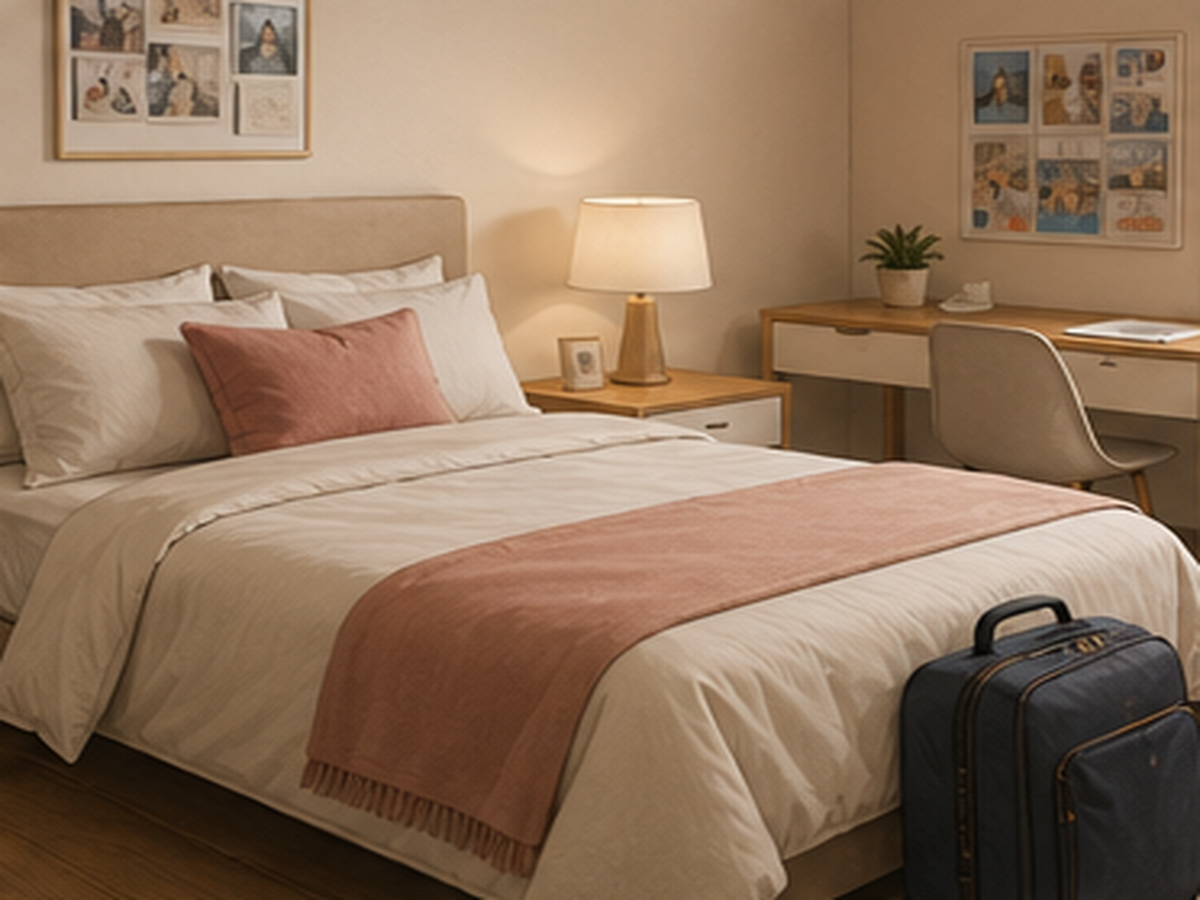
The au pair room is one of the clearest signals that a family is ready for a live-in placement. It is not about luxury. It is about privacy, respect, and practical comfort. A clear room setup helps an au pair understand where they will rest, keep belongings, and have personal time.
Who this guide is for
This guide is for host families preparing a room before requesting introductions or before an au pair arrives. It is useful for new families, families moving rooms around, and families that want their profile photos to show the setup honestly.
What the room should communicate
The room should communicate that the au pair is welcome as an adult living in the home. It should feel clean, private, and usable. A small room can still be good if it is prepared thoughtfully.
Core room checklist
- Private sleeping space
- Clean bed and bedding
- Storage for clothing and personal items
- Lighting for evening reading or study
- Window covering or privacy solution
- Accessible outlet or charging area
- Clear bathroom arrangement
- Wi-Fi access and household instructions
- Space that is not used for family storage
Privacy matters
Families should explain who can enter the room and under what circumstances. Children should learn that the room is private. Parents should also respect that the au pair needs time off and personal space. Privacy is not optional in a live-in role.
Bathroom setup
If the bathroom is private, say that. If it is shared, explain with whom and how the household manages timing. A shared bathroom is not automatically a problem, but unclear expectations can create discomfort.
Storage and comfort
The au pair should have real storage, not a corner of a closet filled with family items. Add hangers, drawer space, and basic bedding. If possible, include a desk or small surface for study, calls, or personal planning.
What to photograph
For the family profile, include one clear photo of the room. Good photos show the bed, storage, and general feel. Avoid showing documents, private family items, or anything that creates security risk.
What to avoid
- A room that doubles as family storage
- No clear place for clothes or luggage
- Children entering freely without boundaries
- No explanation of bathroom access
- Photos that hide the actual room condition
- Promising a room will be ready without a timeline
How to discuss the room in interviews
Families should describe the room calmly and directly. Au pairs may ask about bathroom access, laundry, quiet hours, guests, and privacy. These are reasonable questions. A prepared family can answer without defensiveness.
Final review
Before introductions begin, stand in the room and ask whether an adult could live there comfortably. If the answer is not yet, finish the room before presenting it as ready.
Example room description
A strong description might say: private bedroom on the second floor with bed, dresser, closet space, desk, window shade, and Wi-Fi. Bathroom is shared with two children. Children are not allowed to enter without permission. Laundry is in the basement and family will explain the routine during the first week.
A weak description might say: room provided. That leaves too many questions unanswered.
SEO and reader intent check
Someone searching for au pair room setup wants concrete requirements and photos. This post should help families prepare the room before they claim the profile is ready.
Quick FAQ
Does the room need to be large? No. It needs to be private, clean, usable, and respectful.
Can the room be used for family storage? It should not feel like storage. The au pair needs real personal space.
Should the room be photographed? Yes, for private matching review when the family is ready.
Related next step
After preparing the room, families should upload a clear room photo and make sure the written profile explains bathroom access, privacy rules, and household expectations.
How room setup helps matching
Room setup affects trust before the first interview. A family that can explain the room, bathroom, privacy rules, and household boundaries feels more prepared. An au pair who can picture the living arrangement can ask better questions and decide whether the home feels realistic.
The room does not need to be expensive. It needs to be adult-ready. Families should remove storage overflow, prepare basic furniture, and make sure the room matches what the profile says. If the room photo looks different from the description, the team should ask for clarification.
Quality score self-check
Score the room from 1 to 5 on privacy, cleanliness, storage, lighting, bathroom clarity, quiet, and photo readiness. If the room would feel uncomfortable to explain on an interview call, it probably needs more work before matching.
Implementation path
Step one is to prepare the room physically. Step two is to write the room description. Step three is to take a clear photo for private review. Step four is to discuss privacy rules in the interview. Families should not wait until arrival to explain bathroom access, children entering the room, laundry, or quiet hours.
If a room is not ready, the family should say what remains and when it will be ready. Honest preparation is better than polished wording.
What high quality looks like
High quality means an au pair can understand the living arrangement before serious matching. The article succeeds when a family can check privacy, storage, comfort, bathroom clarity, and photo readiness without guessing.